
Skip to content

2026

Which services sit behind this router? Infrahub Graph Traversal

Every CAB1 asks the same question: if this asset goes down tonight, which services do we touch? Too often, the answer lives in the head of one engineer, in a spreadsheet, or in a diagram that was true two years ago. Infrahub added Graph Traversal in version 1.10 to answer it from the source of truth itself. I tested it in my lab. It answers in under a second, but it lists the services that are exposed, not the services that break.
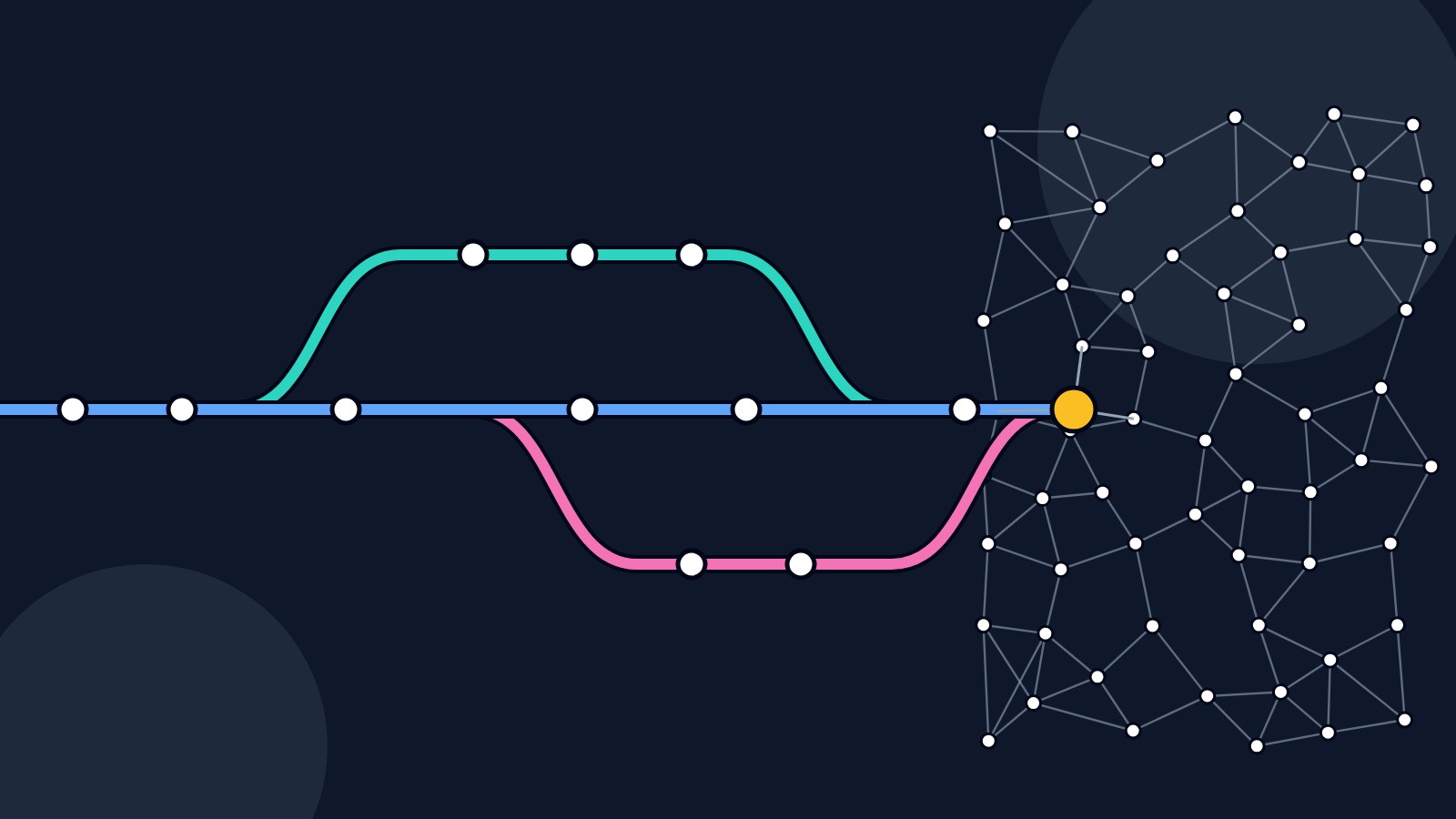

Infrahub branching deep dive: inside the graph, the costs, and the limits

A source of truth is critical infrastructure. Automation reads it all day, so a wrong value in it becomes a wrong configuration on a device. Without branches, every edit lands live: a half-done migration, a maintenance plan and a test all share the database that production automation reads. Infrahub has native, Git-like branches for this data. I opened its graph and measured each step of a branch's life to see what "Git-like" really means.

Draining an IS-IS router: three vendors, three LSPs, and a bug in FRR

In the previous post, one LSP with both the attached bit and the overload bit gave a default route on Junos and FRR, and none on SR OS. I left two questions open: does every vendor keep the attached bit when overload is set, and what happens when the access router has several exits, which is the real use of a drain? And the first post tested only one sender, SR OS.

35 years of IS-IS, and vendors still disagree on two bits

IS-IS has carried IP since RFC 1195, in December 1990. If any routing protocol should behave the same on every router, it is this one. Yet when one LSP carries both the attached bit and the overload bit, Nokia SR OS, Juniper Junos and FRR do not install the same routes.